Why Are Microbes Easy to Study in Evolution
/https://tf-cmsv2-smithsonianmag-media.s3.amazonaws.com/filer/a0/a1/a0a19b6b-d2f0-4466-a108-f888f3e8917a/yong_multitudes.jpg)
When y'all were born, you inherited one-half your genes from your mother and half from your father. That's your lot. Those inherited bits of DNA volition remain with you for all of your life, with no further additions or omissions. You tin can't have any of my genes, and I can't larn any of yours.
Just imagine a different earth where friends and colleagues tin bandy genes at will. If your boss has a gene that makes her resistant to various viruses, yous tin can borrow information technology. If your child has a gene that puts him at gamble of illness, yous can swap it out for your healthier version. If distant relatives have a gene that allows them to better assimilate certain foods, it's yours. In this world, genes aren't just heirlooms to be passed on vertically from ane generation to the next, but commodities to exist traded horizontally, from 1 individual to another.
This is exactly the world that leaner alive in. They can exchange Dna as hands every bit we might exchange phone numbers, money or ideas. Sometimes, they sidle up to one another, create a physical link, and shuttle bits of Deoxyribonucleic acid across: their equivalent of sexual activity. They can also scrounge up discarded $.25 of Dna in their environment, left by their expressionless and decaying neighbors. They tin fifty-fifty rely on viruses to movement genes from 1 cell to another. Dna flows so freely between them that the genome of a typical bacterium is marbled with genes that arrived from its peers. Even closely related strains might take substantial genetic differences.
Bacteria have been conveying out these horizontal cistron transfers, or HGT for curt, for billions of years. Only it wasn't until the 1920s that scientists starting time realized what was happening. They noticed that harmless strains of Pneumococcus could of a sudden start causing illness later on mingling with the dead and pulped remains of infectious strains. Something in the extracts had inverse them. In 1943, a "quiet revolutionary" and microbiologist named Oswald Avery showed that this transformative fabric was DNA, which the non-infectious strains had absorbed and integrated into their own genomes. Four years afterwards, a immature geneticist named Joshua Lederberg (who would later popularize the word "microbiome") showed that bacteria can trade Dna more directly.
60 years on, we know that HGT is ane of the most profound aspects of bacterial life. It allows bacteria to evolve at baking speeds. When they face new challenges, they don't have to look for the right mutations to slowly amass inside their existing Deoxyribonucleic acid. They can just infringe adaptations wholesale, by picking upwardly genes from bystanders that have already adapted to the challenges at paw. These genes often include dining sets for breaking downward untapped sources of free energy, shields that protect against antibiotics or arsenals for infecting new hosts. If an innovative bacterium evolves one of these genetic tools, its neighbors can quickly obtain the same traits. This process can instantly alter microbes from harmless gut residents into disease-causing monsters, from peaceful Jekylls into sinister Hydes.
They can also transform vulnerable pathogens that are easy to kill into nightmarish "superbugs" that shrug off even our most strong medicines. The spread of these antibiotic-resistant bacteria is undoubtedly ane of the greatest public health threats of the 21st century, and it is attestation to the unbridled power of HGT.
Animals aren't so fast. We suit to new challenges in the usual slow and steady mode. Individuals with mutations that leave them best suited to life's challenges are more likely to survive and pass on their genetic gifts to the next generation. Over time, useful mutations go more common, while harmful ones fade abroad. This is classic natural selection—a boring and steady procedure that affects populations, not individuals. Hornets hawks, and humans might gradually accumulate beneficial mutations, but that individual hornet, or this specific militarist, or those particular humans can't selection upward benign genes for themselves.
Except sometimes, they can. They could bandy their symbiotic microbes, instantly acquiring a new package of microbial genes. They tin bring new bacteria into contact with those in their bodies, so that foreign genes migrate into their microbiome, imbuing their native microbes with new abilities. On rare but dramatic occasions, they can integrate microbial genes into their own genomes.
Excitable journalists sometimes like to claim that HGT challenges Darwin's view of evolution, by assuasive organisms to escape the tyranny of vertical inheritance. ("Darwin was wrong," proclaimed an infamous New Scientist cover—wrongly.) This is not truthful. HGT adds new variation into an animal'due south genome simply once these jumping genes arrive in their new homes, they are still subject to skillful ol' natural pick.
Detrimental ones die along with their new hosts, while beneficial ones are passed on to the adjacent generation. This is as classically Darwinian as it gets—vanilla in its flavor and exceptional just in its speed. By partnering with microbes, we can quicken the deadening, deliberate adagio of our evolutionary music to the brisk, lively allegro of theirs.
**********
Along the coasts of Nippon, a reddish-dark-brown seaweed clings to tide-swept rocks. This is Porphyra, better known every bit nori, and it has filled Japanese stomachs for over i,300 years. At first, people basis it into an edible paste. Later, they flattened information technology into sheets, which they wrapped around morsels of sushi. This practice continues today and nori'south popularity has spread all over the world. Still, it has a special tie to Japan. The land's long legacy of nori consumption has left its people especially well equipped to digest the bounding main vegetable. We don't have any enzymes that tin break down the algae, and neither do most of the leaner in our guts.
Just the bounding main is full of ameliorate-equipped microbes. One of these, a bacterium called Zobellia galactanivorans, was discovered but a decade ago, simply has been eating seaweed for much longer. Movie Zobellia, centuries ago, living in coastal Japanese waters, sitting on a piece of seaweed and digesting it. Suddenly, its world is uprooted. A fisherman collects the seaweed and uses it to make nori paste. His family unit wolfs down these morsels, and in doing and so, they swallow Zobellia. The bacterium finds itself in a new environment. Cool common salt water has been substituted for gastric juices. Its usual coterie of marine microbes has been replaced by weird and unfamiliar species. And as it mingles with these exotic strangers, it does what bacteria typically do when they run into upward: It shares its genes.
We know that this happened because Jan-Hendrick Hehemann discovered one of Zobellia's genes in a human gut bacterium chosen Bacteroides plebeius. The discovery was a total daze: what on world was a marine gene doing in the gut of a landlubbing human? The reply involves HGT. Zobellia isn't adapted to life in the gut, and so when it rode in on morsels of nori, it didn't stick around. Just during its brief tenure, it could easily have donated some of its genes to B. plebeius, including those that build seaweed-digesting enzymes called porphyranases.
Suddenly, that gut microbe gained the ability to pause downwardly the unique carbohydrates found in nori, and could feast on this sectional source of energy that its peers couldn't use. Hehemann institute that information technology is full of genes whose closest counterparts exist in marine microbes rather than in other gut-based species. By repeatedly borrowing genes from bounding main microbes, it has get skillful at digesting sea vegetables.
B. plebeius isn't alone in thieving marine enzymes. The Japanese take been eating nori for then long that their gut microbes are brindled with digestive genes from oceanic species. It'south unlikely that such transfers are withal going on, though: Mod chefs roast and melt nori, incinerating whatever hitchhiking microbes. The diners of centuries past only managed to import such microbes into their guts by eating the stuff raw.
They then passed their gut microbes, now loaded upward with seaweed-busting porphyranase genes, to their children. Hehemann saw signs of the same inheritance going on today. One of the people he studied was an unweaned baby girl, who had never eaten a mouthful of sushi in her life. And yet, her gut bacteria had a porphyranase gene, just as her mother'southward did. Her microbes came pre-adapted for devouring nori.
Hehemann published his discovery in 2010 and it remains one of the most hitting microbiome stories around. Just past eating seaweed, the Japanese diners of centuries past booked a group of digestive genes on an incredible voyage from body of water to land. The genes moved horizontally from marine microbes to gut ones, and and so vertically from one gut to another. Their travels may have gone fifty-fifty further. At first, Hehemann could merely find the genes for porphyranases in Japanese microbiomes and non North American ones. That has now changed: Some Americans conspicuously take the genes, even those who aren't of Asian ancestry.
How did that happen? Did B. plebeius jump from Japanese guts into American ones? Did the genes come up from other marine microbes stowing away aboard different foods? The Welsh and Irish take long used Porphyra seaweed to brand a dish called laver; could they take caused porphyranases that they then carried across the Atlantic? For at present, no ane knows. But the pattern "suggests that one time these genes hit the initial host, wherever that happens, they can disperse between individuals," says Hehemann.
This is a glorious example of the adaptive speed that HGT confers. Humans don't need to evolve a gene that can intermission down the carbohydrates in seaweed; if nosotros consume plenty microbes that can digest these substances there's every gamble that our own leaner volition "larn" the fox through HGT.
HGT depends on proximity, and our bodies engineer proximity on a huge scale by gathering microbes into dense crowds. It is said that cities are hubs of innovation considering they concentrate people in the aforementioned place, allowing ideas and information to menstruum more freely. In the same way, animate being bodies are hubs of genetic innovation, considering they allow DNA to catamenia more freely between huddled masses of microbes. Shut your eyes, and picture skeins of genes threading their fashion around your body, passed from i microbe to another. Nosotros are bustling marketplaces, where bacterial traders exchange their genetic wares.
***********
Animal bodies are home to so many microbes that occasionally, their genes make their way into our genomes. And sometimes, these genes bequeath their new hosts with incredible abilities.
The coffee berry tapping beetle is a pest that has incorporated a bacterial gene into its ain genome, which allows its larvae to digest the lush banquets of carbohydrates within java beans. No other insect—not even very close relatives—has the same gene or anything like it; only bacteria do. By jumping into an ancient coffee borer, the gene immune this unassuming beetle to spread across coffee-growing regions around the globe and become a majestic pain in the espresso.
Farmers, so, have reasons to loathe HGT—but also reasons to celebrate it. For one group of wasps, the braconids, transferred genes take enabled a baroque form of pest control. The females of these wasps lay their eggs in still-living caterpillars, which their young then devour alive. To give the grubs a manus, the females likewise inject the caterpillars with viruses, which suppress their allowed systems. These are called bracoviruses, and they aren't only allies of the wasps: They are role of the wasps. Their genes have become completely integrated into the braconid genome, and are nether its control.
The bracoviruses are domesticated viruses! They're entirely dependent on the wasps for their reproduction. Some might say they're not true viruses are all; they're nearly similar secretions of the wasp's torso rather than entities in their own right. They must have descended from an aboriginal virus, whose genes wheedled their way into the DNA of an bequeathed braconid and stayed at that place. This merger gave rise to over xx,000 species of braconid wasps, all of which have bracoviruses in their genomes—an immense dynasty of parasites that uses symbiotic viruses as biological weapons.
Other animals take used horizontally transferred genes to defend themselves from parasites. Bacteria, after all, are the ultimate source of antibiotics. They take been at state of war with each other for billions of years and have invented an extensive armory of genetic weapons for beating their rivals. One family unit of genes, known as tae, make proteins that punch holes in the outer walls of bacteria, causing fatal leaks. These were developed by microbes for use confronting other microbes. But these genes take establish their manner into animals, too. Scorpions, mites and ticks have them. So do body of water anemones, oysters, water fleas, limpets, sea slugs and even the lancelet—a very close relative of backboned animals like ourselves.
The tae family exemplifies the kind of genes that spread very easily through HGT. They are self-sufficient, and don't need a supporting cast of other genes to do their chore. They are also universally useful, considering they make antibiotics. Every living matter has to fence with bacteria, so whatsoever cistron that allows its possessor to control bacteria more effectively will find gainful employment throughout the tree of life. If information technology tin make the jump, it's got a good chance of establishing itself every bit a productive role of its new host. These jumps are all the more than impressive because we humans, with all our intelligence and applied science, positively struggle to create new antibiotics. So flummoxed are we that we haven't discovered whatsoever new types for decades. But unproblematic animals like ticks and sea anemones can make their own, instantly achieving what nosotros need many rounds of research and development to exercise—all through horizontal gene transfer.
These stories portray HGT as an additive force, which infuses both microbes and animals with wondrous new powers. Just information technology can as well be subtractive. The aforementioned process that bestows useful microbial abilities upon animal recipients can brand the microbes themselves wither and decay, to the point where they disappear entirely and only their genetic legacies remain.
The beast that best exemplifies this phenomenon can be institute in greenhouses and fields around the globe, much to the chagrin of farmers and gardeners. It'southward the citrus mealybug: a pocket-size sap-sucking insect that looks similar a walking dandruff chip or a woodlouse that'southward been dusted in flour. Paul Buchner, that super-industrious scholar of symbionts, paid a visit to the mealybug clan on his tour of the insect globe. To no one's surprise, he found leaner inside their cells. But, more than unusually, he also described ''roundish or longish mucilaginous globules in which the symbionts are thickly embedded". These globules languished in obscurity for decades until 2001, when scientists learned that they weren't just houses for leaner. They were leaner themselves.
The citrus mealybug is a living matryoshka doll. Information technology has bacteria living within its cells, and those bacteria take more bacteria living inside them. Bugs inside bugs within bugs. The bigger one is now called Tremblaya afterwards Ermenegildo Tremblay, an Italian entomologist who studied under Buchner. The smaller 1 is chosen Moranella after aphid-wrangler Nancy Moran. ("It is a kind of a pathetic footling thing to exist named later you lot," she told me with a grin.)
John McCutcheon has worked out the origins of this weird hierarchy—and information technology's nigh unbelievable in its twists and turns. It begins with Tremblaya, the beginning of the two bacteria to colonize mealybugs. Information technology became a permanent resident and, like many insect symbionts, it lost genes that were important for a complimentary-living existence. In the cozy confines of its new host, it could afford to get by with a more streamlined genome. When Moranella joined this 2-way symbiosis, Tremblaya could afford to lose fifty-fifty more than genes, in the surety that the new arrival would pick up the slack. Here, HGT is more well-nigh evacuating bacterial genes from a capsizing ship. It preserves genes that would otherwise exist lost to the inevitable decay that afflicts symbiont genomes.
For instance, all iii partners cooperate to make nutrients. To create the amino acid phenylalanine, they need 9 enzymes. Tremblaya can build one, 2, v, 6, 7, and 8; Moranella can make 3, 4, and 5; and the mealybug lone makes the 9th. Neither the mealybug nor the two leaner tin make phenylalanine on their ain; they depend on each other to fill the gaps in their repertoires. This reminds me of the Graeae of Greek mythology: the three sisters who share one heart and one tooth between them. Anything more would exist redundant: Their arrangement, though odd, nonetheless allows them to see and chew. So it is with the mealybug and its symbionts. They ended up with a single metabolic network, distributed betwixt their three complementary genomes. In the arithmetic of symbiosis, one plus one plus 1 tin can equal i.
*********
The world around us is a gigantic reservoir of potential microbial partners. Every mouthful could bring in new microbes that assimilate a previously unbreakable role of our meals, or that detoxify the poisons in a previously inedible food, or that impale a parasite that previously suppressed our numbers. Each new partner might assist its host to eat a little more, travel a fiddling further, survive a little longer.
Most animals can't tap into these open-source adaptations deliberately. They must rely on luck to endow them with the right partners. Simply we humans aren't so restricted. We are innovators, planners and problem-solvers. And nosotros take one huge advantage that all other animals lack: We know that microbes exist! We have devised instruments that can see them.
We tin can deliberately grow them. We accept tools that tin can decipher the rules that govern their existence, and the nature of their partnerships with us. And that gives us the power to dispense those partnerships intentionally. We can replace faltering communities of microbes with new ones that will lead to better wellness. We tin create new symbioses that fight disease. And we tin pause age-onetime alliances that threaten our lives.
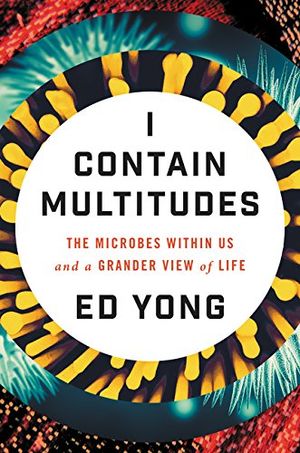
From the forthcoming book I Contain MULTITUDES: The Microbes Within Usa and a Grander View of Life past Ed Yong. Copyright © 2016 past Ed Yong. To exist published on August ix by Ecco, an imprint of HarperCollins Publishers. Reprinted by permission .
Source: https://www.smithsonianmag.com/science-nature/how-miraculous-microbes-help-us-evolve-better-faster-stronger-180959909/
0 Response to "Why Are Microbes Easy to Study in Evolution"
Post a Comment